
HMI trends are a frequent topic of discussion in the automotive world, especially as they continue to pivot for users. Drivers are currently looking for real-time communications and the ultimate usability. With the rise of urbanization, these trends will likely continue to pivot for user needs. The general future of HMI requires a focus shift for automotive manufacturers, explicitly pertaining to privacy and specialized features.
Automotive experts at Star are not novices to consumer-driven demands in the space. According to Star experts, projections imply some minor challenges and vast solutions as trends forge ahead. One particular item of interest was voice-activated assistants, which will continue to be prominent in global automotive markets.
With HMI design in automotive industries evolving, here are the top 5 automotive HMI trends that experts at Star foresee coming forward in the next few years:
Voice-Activated Assistants
Another phrase to describe this might also be conversational HMI, known as the use of virtual assistants such as Siri. Why would this be a key trend moving forward? One reason conversational HMI will boom is the increased desire for automotive engineers to add value for drivers that still need to put safety first.
These features have already made their way into different automotive spaces, such as the 2015 Tokyo Motor Show, where Toyota presented the virtual robot companion, Kirobo Mini. Many other manufacturers are likely to follow this budding trend.
Haptics
New-age design is calling for engineers to get genuinely inventive. One of the most interesting HMI concepts is Project Soli by Google. Soli technology successfully integrated into the Pixel 4 design through the Motion Sense feature. This feature allows the device to process facial features without the user having to touch their phone.
The system works to solve modern problems for the average machine learning model, including accurately predicting gestures across diverse user populations. Star predicts that such a feature will eventually find its way into the cars of millions, using an mm-wave radar sensor for in-vehicle infotainment control. Such a daring HMI design will pair nicely with voice-activated AI assistants.
Autonomous Driving Experiences
Manufacturers such as Tesla have long been designing and reshaping the idea of what it means to drive a car. The recent onset of Tesla models offers the ability for drivers to throw their vehicle into autopilot, which can steer, brake, and accelerate on its own.
Many other manufacturers have slowly followed suit with their safety systems that do the same on a micro-scale. With the innovations making their way into future designs, HMI trends will surely call for readjustments to modern interiors.
One prediction is the elimination, or adjustment of the steering wheel in certain instances, designers at Rinspeed Budii have considered developing a completely different interface for the steering wheel.
Displays
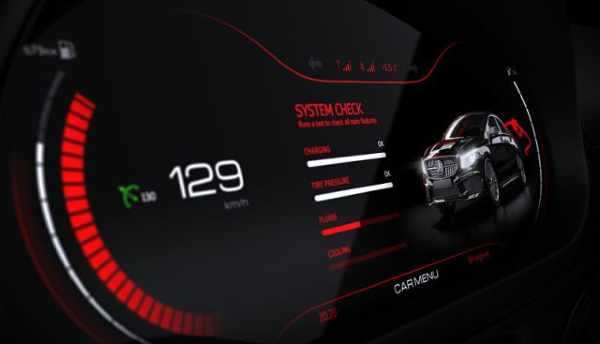
As far as HMI design in the automotive sector is concerned, the possibilities are endless. One idea that engineers have played with is the concept of whether or not the AI features that exist within infotainment systems need to be limited to display surfaces.
Yangfeng is a corporation currently toying with the idea of bringing HMI capabilities to any surface within the cabin. Such a feature would make it much easier for drivers to access entertainment and safety features on the go.
Telematics
Drivers need to know what other drivers are doing and which accidents are forthcoming, along with construction sites, potholes, etc. Telematics assists users by providing useful information in real-time. One of the most efficient telematic designs is GPS, but it is not the end-all to HMI developments.
Industry experts at Star also predict that the Black Boxes will soon make their way into vehicle interiors. These integrations will rapidly collect data pertaining to vehicle speed, overall performance, and distance. However, that`s not where it ends.
A new integration, Vehicle-to-Everything Connectivity, will make it easy for vehicles to exchange essential data points with other cars and more. The future of this connective feature will eventually call for cloud integration, which will be a significant feat since it currently relies on radio frequencies.
The Ultimate Future of HMI
Overall, the future of automotive HMI trends is a very bright one. With a range of technologies emerging almost daily, it will be exciting to see which HMI design forges a new path for users and designers. What specific trends will appear in the next few years? Only time will tell.